
When Should You Get an ECG Test Done? Warning Signs to Watch For
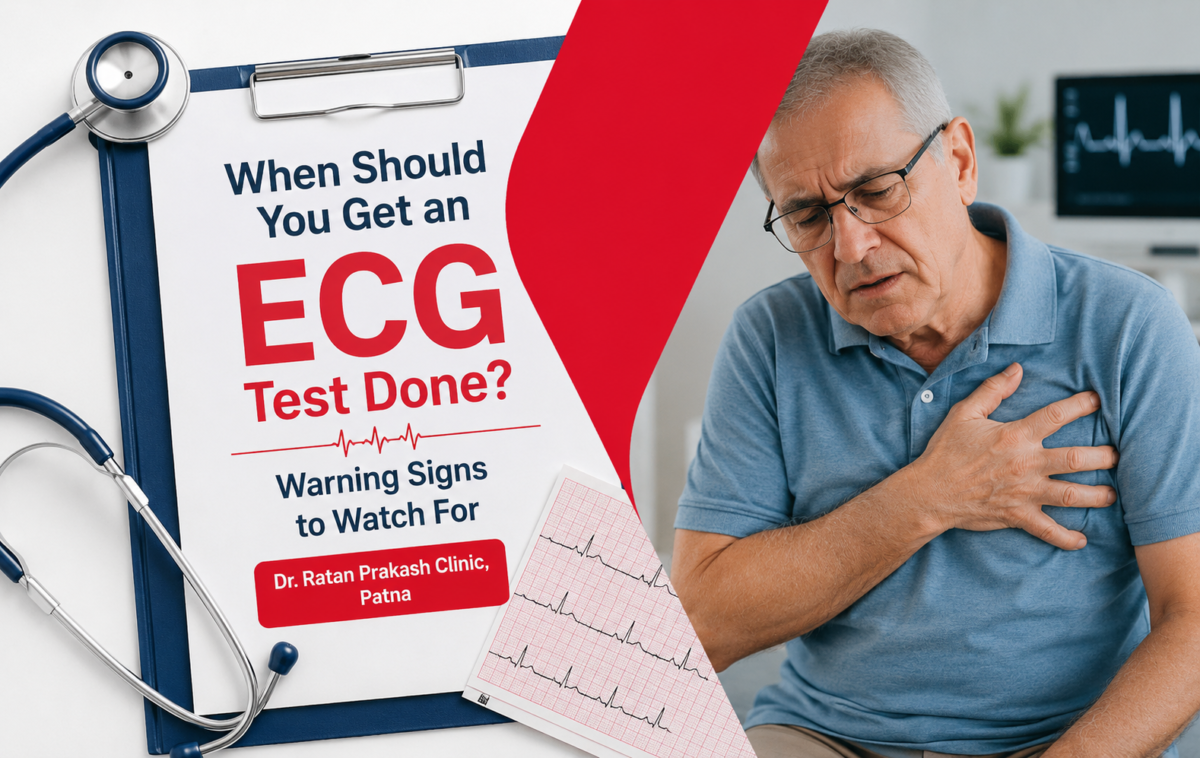
Most people only think about their heart when something goes wrong. A sudden chest pain, a racing pulse in the middle of the night, or a family member’s heart attack that scares everyone into finally booking a check-up. But by the time symptoms show up loudly, the heart has often already been struggling quietly for months, sometimes years.
An ECG, or electrocardiogram, is one of the simplest ways to catch that quiet struggle early. It takes a few minutes, doesn’t hurt, and can tell a doctor things that no blood test or physical exam can. Yet a lot of patients I see at my clinic in Anisabad have never had one done in their life, even well into their 40s and 50s.
So let’s talk about what an ECG actually is, and more importantly, when you should stop putting it off.
What Exactly Does an ECG Test Show?
Your heart beats using electrical signals. Every contraction, every pause between beats, is controlled by tiny electrical impulses travelling through the heart muscle. An ECG machine picks up these signals through small electrodes placed on your chest, arms, and legs, and draws them out as a wave pattern on paper or a screen.
A trained physician can look at that wave pattern and tell whether:
- Your heart rhythm is regular or irregular
- Any part of the heart muscle is receiving less blood than it should
- There’s evidence of a past or ongoing heart attack
- The heart chambers are enlarged or under strain
- Certain electrolyte imbalances are affecting your heart
The whole test is over in about five to ten minutes, and there is no needle, no radiation, and no preparation needed. That’s part of why it’s such a useful first step whenever something feels off.
Signs That Mean You Should Get an ECG Done Soon
You don’t need to wait for a heart attack to justify a heart check-up. In my years of practice, these are the symptoms that should send someone straight to get an ECG rather than wait it out:
Chest discomfort that comes and goes. This doesn’t always feel like the dramatic “elephant sitting on my chest” pain shown in movies. Often it’s a dull heaviness, tightness, or burning sensation, especially during walking or climbing stairs, that eases with rest.
Unexplained breathlessness. If you find yourself running out of breath doing things that never used to tire you, like walking to the market or climbing one flight of stairs, your heart may be working harder than it should.
Palpitations or a fluttering feeling in the chest. Occasional skipped beats can be harmless, but frequent palpitations, especially with dizziness, deserve a proper look.
Sudden fatigue with no clear reason. Feeling unusually tired for days without an infection, poor sleep, or stress to explain it can sometimes point to the heart.
Fainting spells or near-fainting episodes. These should never be brushed aside, particularly in older adults.
Swelling in the legs or ankles. This can be a sign that the heart isn’t pumping blood efficiently.
If any of these sound familiar, don’t wait for the symptom to get worse. An ECG is quick, affordable, and gives clear answers.
Who Should Get Regular ECG Screening, Even Without Symptoms
Beyond symptoms, certain people benefit from getting an ECG done as a routine precaution, once a year at minimum:
- Anyone above the age of 40, as a baseline heart check
- People with high blood pressure or diabetes, since both conditions quietly damage the heart over time
- Smokers, or those who used to smoke regularly
- Anyone with a family history of heart disease or sudden cardiac events
- People who are overweight or lead a mostly sedentary lifestyle
- Patients about to undergo any surgery, as a pre-operative requirement
- Anyone returning to intense physical activity or exercise after a long gap
I often tell patients that an ECG works like a photograph of your heart’s electrical activity at that moment. One test alone doesn’t tell the whole story, but tracking it over the years builds a picture your doctor can actually use to catch changes early.
What to Expect During Your ECG Test at the Clinic
There’s really nothing to be nervous about. You’ll lie down comfortably while small sticky electrodes are placed on your chest, wrists, and ankles. These are connected by wires to the ECG machine. You’ll be asked to stay still and breathe normally for a short while as the machine records your heart’s activity.
There’s no pain, no injection, and no exposure to radiation. Once done, the results are usually reviewed immediately, so you get to discuss your heart health with the doctor in the same visit rather than waiting days for a report.
Why Early Detection Matters More Than Treatment
A lot of heart conditions, including irregular rhythms and early signs of coronary artery disease, are far easier to manage when caught early. Lifestyle changes, medication, and regular monitoring can often prevent a minor issue from becoming a medical emergency. Waiting until symptoms are unbearable usually means the condition has already progressed, and treatment becomes more complicated and expensive.
This is really the whole idea behind preventive cardiology: catching small warning signs before they turn into big problems.
Book Your ECG Test at Dr. Ratan Prakash Clinic, Anisabad
If you’ve been putting off a heart check-up, or if any of the symptoms above sound familiar, it’s worth getting checked rather than assuming it will pass. Dr. Ratan Prakash brings over 30 years of experience treating heart and general health concerns at his clinic in Anisabad, Patna, offering ECG testing along with personalized consultation on the same visit.
Call +91 94308 29175 or +91 86031 04615 to book your ECG test today, or visit the clinic at Phani Ghosh Lane, Near Blue Medix, Opposite Durga Mandir, Main Road, Anisabad, Patna.
Your heart doesn’t ask for attention until it’s struggling. Give it a check-up before it has to.
